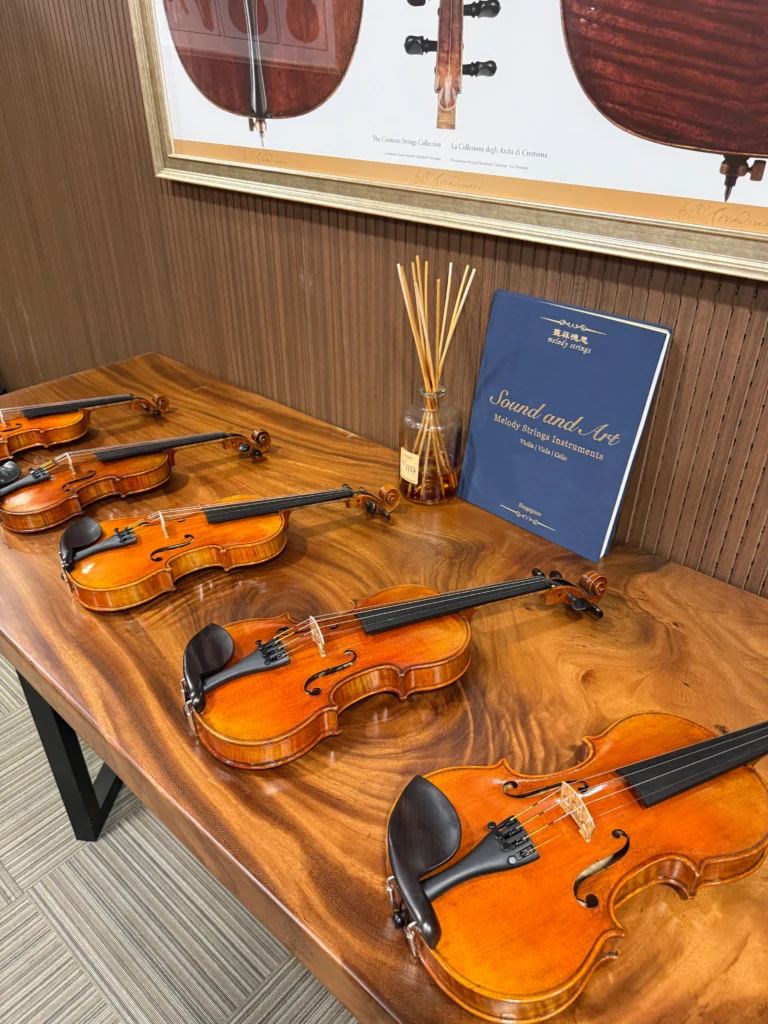
Choosing your first violin is an exciting milestone for any new music learner. Whether you’re a young beginner or an adult starting your musical journey, finding the right instrument sets the foundation for enjoyable practice, steady progress, and long-term motivation. With so many options available, it can feel overwhelming — but don’t worry. Here’s a clear and practical guide to help you choose the perfect first violin.
1. Start With the Right Size
Violins come in different sizes to suit players of various ages and arm lengths. Playing on the wrong size can cause discomfort and even poor posture.
How to choose the size:
- Measure the student’s arm length from the neck to the middle of the palm.
- Compare with a sizing chart (e.g., 1/10 for toddlers, 1/8–1/2 for young children, 3/4 for juniors, 4/4 for teens/adults).
- If unsure, always choose the smaller size — it’s safer and more comfortable.
Your violin teacher can also help assess this during a trial lesson.
2. Know the Basic Components of the Violin
Here is the checklist before you make any purchase~
- Wood Selection(spruce top, maple back/sides) — avoid violins made of laminate.
- Ebony fittings (fingerboard, pegs, chinrest) — more durable and stable.
- Good quality strings — make a big difference in sound.
- Proper setup — the bridge, soundpost, and string height should be adjusted correctly by a luthier.
Poorly setup violins are harder to play and can discourage beginners quickly.
3. Listen for the Sound
Even beginner violins have different tones. When choosing an instrument, listen for:
- Warm, clear sound
- Good resonance
- Even tone across all four strings
- Quick response when bow touches the string
If the student is new, ask the teacher to test it for you — their ear will help you choose wisely.
4. Check Comfort and Playability
Comfort is crucial for developing good technique. Make sure:
- The violin feels balanced and not too heavy
- The chinrest sits comfortably
- The pegs turn smoothly
- The bow is easy to control
Students should feel relaxed when holding the instrument for the first time.
5. Ask for a Teacher’s Recommendation
One of the best ways to avoid low-quality instruments is to seek guidance from your teacher. They can:
- Help test several violins
- Advice on whether the violin is suitable for the student
- Prevent you from buying low-quality “online-only” violins that look beautiful but play poorly
A teacher’s experience can save you both time and money.
6. Try Before You Buy
Whenever possible, let the student try several violins. Every violin has its own character, even within the same model.
Trying in person helps you compare:
- Sound
- Feel
- Build quality
- Comfort
Conclusion
Choosing your first violin is a meaningful step, and with the right guidance, it can be a joyful experience. A well-sized, well-made, and well-set-up instrument will motivate students, support healthy technique, and make every practice session more enjoyable.
If you need personalised recommendations, you’re welcome to contact Melody Strings for professional advice and guidance.